Categories
Uncategorized

The Power of Business Storytelling : Part 1

The year is 1748; British Aristocrat John Montague, who was the 4th Earl of Sandwich, Kent, invested the majority of his leisure time to play cards. He loved gambling so much that he didn’t want to stop and lay down his cards, not even to eat; but he enjoyed eating a snack using one hand whilst playing. One day, his servants called him for dinner, but he refused to come and yelled at them: “put meat between two pieces of bread and bring it to me!”… and this is how the idea of the sandwich was born. To be accurate, the sandwich existed beforehand, but was considered to be lower-class food. It was the Earl who gave it its noble status and its name.

Do you know what the interesting thing about this story is? You are almost certain to remember how the sandwich was invented, and it will be much easier for you to do so after learning about it through a story, and not through a bullet-point presentation.

During 65% of our time, we speak informatively about who did what and why. In other words, we tell stories. Even when we update a colleague who was abroad about the board meeting they missed, our tendency is to tell them who said what, who replied, who dared to ask… why? Because it is the best way for our brain to encode the message as experiential and remember it for the long term.
For over 27,000 years, since the discovery of the first cave paintings, storytelling serves as one of the basic interpersonal communication methods. This was the way information traveled between people and over generations. The last decade brought a new understanding to the business world: effective interpersonal communication lies at the way in which information is transmitted. This is how the “business storytelling” technique was born.

So what is “business storytelling” anyway?

Business storytelling is a method for delivering messages, whether to potential clients, board members or employees, in a way that presents events alongside facts, numbers and data while still emphasizing imagery that the audience can imagine and feel. The essential elements of business storytelling are plot, characters and the point of view of a main narrative. Additionally, every story should be made out of 3 parts: an opening, a middle and an ending. The idea is to be the director of our own message and turn it into a movie in our listener’s mind. Not just any movie, but a blockbuster; one they won’t forget and will recommend to all their friends. By doing so, we will succeed in connecting our audience to our message and assist them in identifying with it. From this point forward, the road to internalizing and implementing the message is much shorter.

What are the advantages of business storytelling? How does it benefit us?

One would assume that in a world driven by technology, in which success is measured by the ability to predict the next trend, the value of a story would be lost. In reality, however, storytelling is gaining stronger momentum than ever before. It is precisely because of this information overload we experience at any given moment, that stories become more memorable, unique and worth our time.

• More memorable: Studies show that a story is 22 times more effective for memorizing details than a dry presentation of facts (according to Shawn Callahan, a pioneer and leader of the business storytelling technique). Have you seen Steve Jobs’ famous commencement speech at Stanford University? What do you remember? The stories! The one about him being adopted and his parents wanting a daughter, the one about dropping out of college and being broke, the one about getting fired from Apple, the company he himself started, the one about his illness… you get the point.

• In a competitive market, a story helps you highlight what you have that your competitors don’t. No business / product has the same story as yours; it gives you personality and your own DNA. Your story helps your audience to learn about you, get to know you and feel more involved – which leads to a higher sense of belonging and commitment.

• 95% of decision-making processes are based upon the irrational level. Touching stories, which create an emotional connection, are better able to persuade and affect than can facts and numbers.

• One of the main challenges in delivering business content is explaining complex ideas or procedures in a simple, easy to understand manner even to those who come from a different professional field. Storytelling allows simplification of complex ideas or products by the use of personification and universal details, such as time, circumstances, plot, conflict and resolution.

Next in our blog – Business Storytelling, Part 2:

  • The 3 models for building a business story
  • The most common business stories
  • The 5 elements for building a good story
  • Putting the WOW factor in your story
Categories
Uncategorized

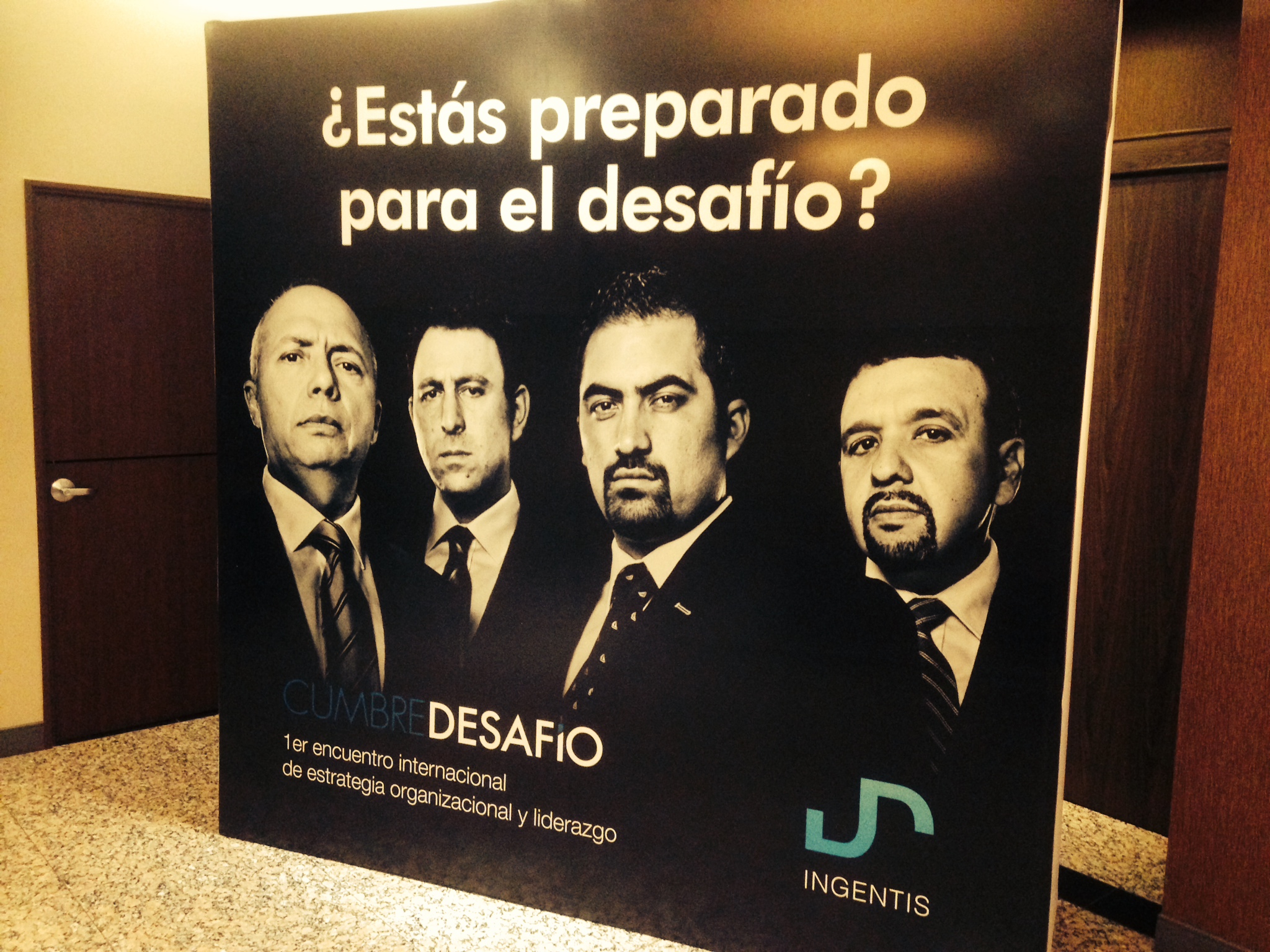
International Summit of Strategy and Leadership in Mexico City

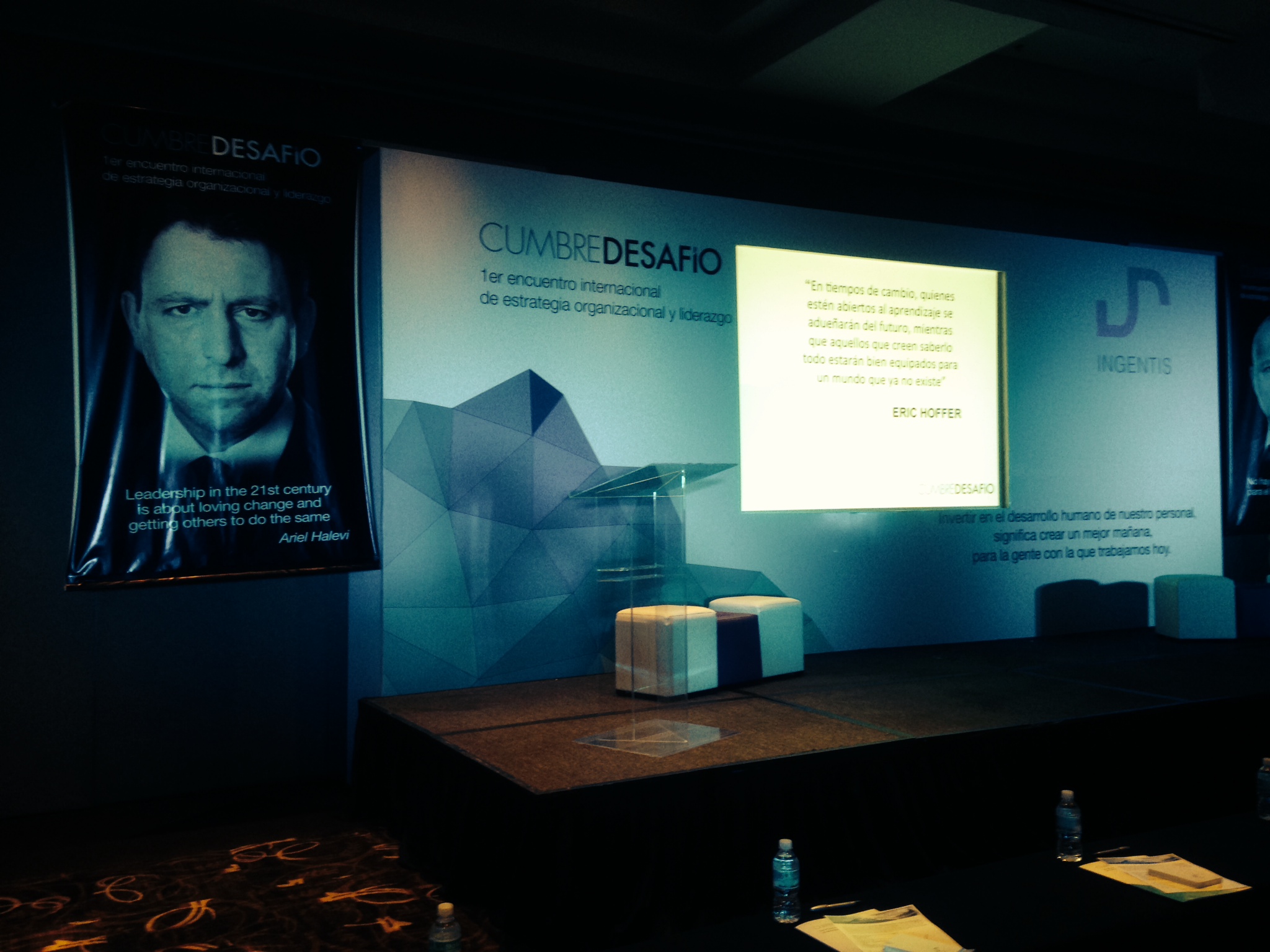
VAYOMAR’s co-founder performed at Mexico City for the 1st International Summit of Strategy and Leadership. Together with other specialists from Spain, Cuba and Mexico, VAYOMAR helped companies figure out what is the best strategic design for their business and develop their leadership skills accordingly. We presented the 10 core variables of persuasion and taught audience how to small talk – we thank Ingentis company for the invite!

11025857_953478928004376_5496512137436405885_o photo 2 photo 3

Categories
Uncategorized

International Women's Day : 5 Powerful Speeches by Powerful Women

In honor of International Women’s Day, here are 5 women who deliver strong speeches – watch and be inspired:

Lupita Nyong’o

Right before winning an Academy Award for her first ever performance in the film “12 Years a Slave”, Nyong’o was awarded the Best Breakthrough Performance at the seventh annual Black Women in Hollywood Luncheon. There, she delivered an inspirational acceptance speech about black beauty.

Lupita starts off by reading a letter she received from a young girl, using those crucial first minutes to capture audience attention using an attention booster. She then goes on to talk about the subject of her speech – beauty – without forgetting to insert comic reliefs, smile, make eye contact and change her intonation to accentuate the most important parts of her message.

<
“My complexion had always been an obstacle to overcome and all of a sudden, Oprah was telling me it wasn’t. It was perplexing and I wanted to reject it because I had begun to enjoy the seduction of inadequacy. But a flower couldn’t help but bloom inside of me”.

Brené Brown

Brown, a research professor at the University of Houston, has spent the past decade studying vulnerability, courage and worthiness. In one of the most viewed TED Talks ever, she speaks of the power of vulnerability. She opens by mentioning someone telling her: “The thing I like about your talk is you’re a storyteller”, and indeed, she then goes on to present her research just like a story.

Brown divides her speech into sections by titles, and pauses when each title is presented, giving the audience time to process it. She also uses a lot of humor in her speech, and her delivery style includes an extensive use of hand gestures and eye contact.


“The only people who don’t experience shame have no capacity for human empathy or connection … we all know that feeling: “I’m not blank enough. I’m not thin enough, rich enough, beautiful enough, smart enough, promoted enough.” The thing that underpinned this was excruciating vulnerability, this idea of, in order for connection to happen, we have to allow ourselves to be seen, really seen.”

Maya Angelou

A renowned poet, novelist and actress, Angelou was known not only for her writing skills, but for her powerful orations. In 1993, Angelou recited her poem “On the Pulse of Morning” at the inauguration of President Bill Clinton, becoming the first poet to make an inaugural recitation since Robert Frost in 1961. A master of the written word, she had her own unique style of delivering her messages when speaking, using her tone and diction to emphasize each word while keeping a steady rhythm fitting of her literary works.


“The Rock cries out to us today, / You may stand upon me, / But do not hide your face.”

Hilary Clinton

Former U.S. Secretary Hilary Clinton was the headline prime-time speaker in the 2008 Democratic National Convention, back when she was a New York State Senator. In a speech supporting Barack Obama, who was then the Democratic candidate for presidency, Clinton succeeded in doing what most speakers struggle with: delivering one clear message – the Democratic Party is a team, fighting together for the future of America.

Clinton begins by saying how honored and proud she is to be there – and her body language follows. By standing upright, looking around the room and talking with a smile, she transmits confidence and pride. As she turns to each segment of the room, she captures the full attention of the audience, who cheer and applaud her all throughout the speech.


“That is our duty, to build that bright future, and to teach our children that in America there is no chasm too deep, no barrier too great – and no ceiling too high – for all who work hard, never back down, always keep going.“

Malala Yousafzai

Yousafzai, a Pakistani activist for human rights, became the youngest ever Nobel Prize laureate in 2014, when she was just 17 years old. An advocate of female education in her native Swat Valley, she was shot in the head by a Taliban gunman simply for getting on the school bus. Since the incident, which sparked widespread interest and support, Yousafzi’s advocacy for children’s right for education has grown into an international movement.

In her Nobel acceptance speech, she uses the storytelling technique when sharing her own experience, representing the voices of many. She is determined and straightforward in her body language and tone of voice as she conveys a message of courage, defiance and hope for girls all around the world.


“This award is not just for me. It is for those forgotten children who want education. It is for those frightened children who want peace. It is for those voiceless children who want change. I am here to stand up for their rights, to raise their voice.”

Categories
Uncategorized

VAYOMAR Joins 8200 EISP

VAYOMAR has recently joined other leading companies in partnership of The 8200 Entrepreneurship and Innovation Support Program. The program provides 20 entrepreneurs, all from the 8200 Alumni Association, professional support and accompaniment for five months, during which they will learn how to execute their projects.

For starters, participants of the program will learn how to present their idea in just 3 minutes according to a model developed by VAYOMAR and will receive feedback via our online platform HowDidIDo.

VAYOMAR is very excited to be taking part in this great program!

Categories
Uncategorized

VAYOMAR at Google TLV

[fusion_text]VAYOMAR recently visited Google Campus TLV, where we worked together with Google’s startupists and developers on creating the perfect 60-second pitch. After giving a lecture about presenting a start-up in just one minute, we worked with each group of Googlers individually in order to ensure their success in pitching their ideas. We had a great time and we thank Google for the warm welcome![/fusion_text]

Categories
Uncategorized

Soft Skills – Hard Measures

Every training manager finds himself struggling (and even conflicted) with the issue: how to measure the effectiveness of training? Is it even possible to quantify soft skills? What happens “the day after” the training? How does one actively implement the Kirkpatrick Model (which, in spite of its being the most well-known model in the world for measuring organizational study, it is actively implemented in less than 20% of the organizations….)?

There is overwhelming agreement among managers that soft skills, and in our case, communications and message delivery skills, are a positive and necessary condition for succeeding in business and for effective organizational management. But how can we really know the communications capabilities of our employees and managers? Where are they on the scale concerning their communications abilities, in relation to other employees in the organization or outside of it? To what level do they succeed in conveying the correct messages in a way that creates the desired impact? And most important, how can we measure and quantify their success rate?

The answer to all these questions can be found in CQ = Communication Quotient

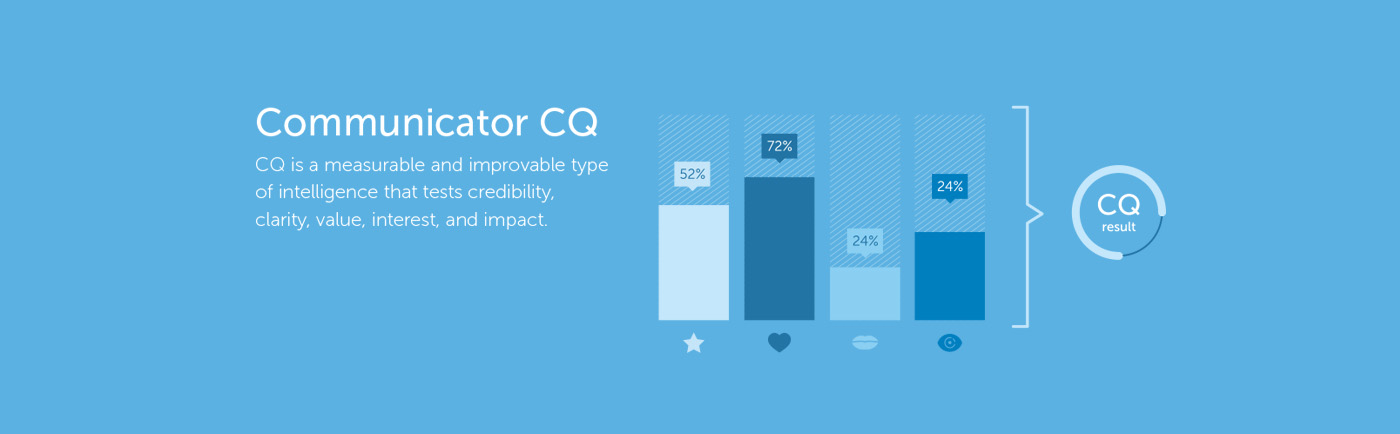
One of the sharpest criticisms of the emotional intelligence quotient tests, EQ, is the fact that they are too general and too broadly based. Luke (2005) claims that the definition of the concept isn’t stable and as a result it has too many varied components to be included in the framework of one theory. The CQ gauges actually supply a solution to this criticism, as they evaluate and measure only the skills affecting communication and the transfer of messages.

slide_cq_completeh

How can CQ help managers in your organization?

  1. Mapping and diagnosis of managers (or managerial reserve) according to measured parameters, such as:
  • How well does the manager transmit messages in a clear and precise manner?
  • How well does the manager present a valuable message to the person opposite him/her?
  • Does the manager create interest in his message and turn it into something those listening to him will remember?
  • How well does the manager succeed in creating an impact on his surroundings?
  • To which style of speech patterns does the manager belong?
  1. Specific compatibility of tools and models for maximum and surgical improvement of communications and message transmittance based on mapping and diagnosis. The following parameters will be considered when building the program:
  • KPI’s of the manager or group of managers.
  • The format that will make maximum improvement possible: guidance, computerized learning, face-to-face consultation.
  • Time period needed to achieve the necessary improvement
  1. Evaluation of improvement, follow-up on the learning graph and implementation during the entire process
  • Initial evaluation grade based on CQ predicted parameters
  • Determination of desired result for measuring improvement
  • Evaluation report of quality (verbal) and quantity (numerical) with points that are determined as landmarks in the learning process and its completion.


How was the CQ idea born?

For the past 12 years the VAYOMAR has specialized in developing methodologies and models for interpersonal communications and message delivering. The thousands of workshops and consultations that we have performed gave us the opportunity to become closely acquainted with the strengths and obstacles that characterize employees and managers when they need to convey messages. Cross-checking our wide data base with up-to-date academic studies in the field of communications, led us to the development of the unique CQ, which includes:

  • 5 core measurements on a quantifying scale for predicting an outstanding speaker
  • Listing 8 typical speaking styles

CQ will help you to know not only how employees or managers begin the learning process and what it includes; it will also help you to know how they complete the process and where they will end up when it’s completed.


Categories
Uncategorized

VAYOMAR in the spotlight

IDC Herzliya graciously hosted VAYOMAR at one of their spotlight events, which showcase companies from all over the country.

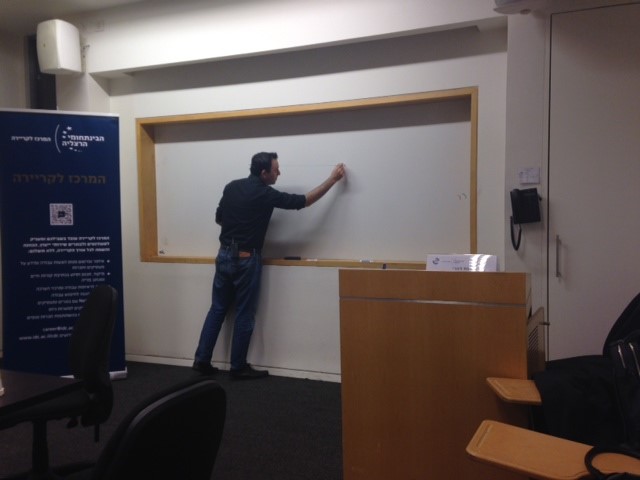
Many students from all faculties attended the event and were treated to a presentation by VAYOMAR’s founder, Ariel Halevi.

Ariel had a great time speaking to these students on a topic he is very familiar with: “The Relationship Between Delaying Gratification and Persuasion.” He spoke passionately about the process it takes to become more persuasive through different forms of fulfillment.

Want to learn about it too? CLICK HERE

ARIEL AT THE IDC

Categories
Uncategorized

Apply Now to “Minute to Pitch It”

VAYOMAR is happy to announce its partnership with MassChallenge Israel, and is proud to be part of the program event launch this February, “Minute to Pitch It.”

Apply now to pitch at the startup showcase. The chosen startups will get pitch preparation from VAYOMAR’s experts!

MassChallenge Invite

Categories
Uncategorized

How To Speak “Management”

For most people, picking up a new language is a challenging task, no matter how smart they are.  Gaining proper eloquence, learning the nuances – it can take years of practice.

However, there is one language you can pick up in a matter of hours, and while it may be most relevant for only a select number of people, it may have more to do with your professional development (and possible promotion) than any other language you could acquire.  What language is this? “Management.”

    Yeah, those people   
    “up there” have their
    own language… 


This article will attempt to offer an introduction to the language called “management,” by presenting some of the key words in this language’s vocabulary. Remember, language is more than just a means of communication; it’s also represents mindset, and effective management is all about being in the right mindset.

This language can be picked up in a matter of hours and used fluently in a matter of weeks. Why? Because it doesn’t have tens of thousands of words, like regular language do, and there are only a few single grammatical rules. There is only a short list of key words you need to learn and fully internalize in order to gain ownership of this language.

Your new vocabulary list:

  • Asset
  • Burden
  • Objective
  • Milestone
  • Bottleneck
  • Force Amplifier
  • Early Indicator
  • Assumption
  • Problem Oriented
  • Solution Oriented
  • Reactive
  • Proactive
  • Descriptive
  • Analytical
  • Recommendation
  • Alternatives

Let’s get started with the most important words on this list:  Asset.

The standard definitions of the word ‘Asset’ are:
–noun

  1. A useful and desirable thing or quality: Organizational ability is an asset.
  2. A single item of ownership having exchange value.
  3. Assets,
    • Items of ownership convertible into cash; total resources of a person or business, as cash, notes and accounts receivable, securities, inventories, goodwill, fixtures, machinery or real estate (opposed to liabilities).
    • Accounting. The items detailed on a balance sheet, esp. in relation to liabilities and capital.
    • All property available for the payment of debts, esp. of a bankrupt or insolvent firm or person.
    • Law. Property in the hands of an heir, executor, or administrator, that is sufficient to pay the debts or legacies of a deceased person.

In Management, the definitions of the word “Asset” are slightly different: 

–Value

  1. The degree of your contribution to your manager’s ability to make better decisions.
  2. The enhancement you bring to the overall resources your managers have available.

Management is about a whole list of challenges that relate to vision building, resource allocation, team building, and more.  But at the heart of all of these challenges, there’s one fundamental core-challenge: decision-making. 

If you want to speak fluent management , you need to understand that your message has to be directly related to the most pressing decisions that decision-makers are facing at that time, in context of the Objectives “they” are trying to achieve.

When your message does not relate to these pressing decisions, you will quickly be tagged as a Burden, a vocabulary word you want to avoid. However, if you consistently ensure that your message is directly related to the pressing decisions they are facing, and if you construct your message in a way that helps them make better decisions, you will quickly be tagged as an Asset.

Remember, being an Asset is about enhancing other people’s ability to make better decisions.

The first thing about being an Asset, has to do with your own orientation.  Which has more of your attention: the problem at hand, or the possible solutions to that problem?

When you are Problem-Oriented, the nature of your message is likely to be Descriptive – offering endless details and facts about the current situation as well as the path that led up to this current situation, without any suggested solutions.  Problem orientation is about looking back, searching for excuses (and in many cases, people to blame).  Being Problem-Oriented is the fastest way to become a Burden.  Until humanity finds a way to travel back in time, the past cannot be altered, making this mindset a total waste of your manager’s time (and your time, too).

Effective managers care more about the future than the past.  When they do look into the past, it’s only in order to better shape the future. 

To ensure that you are perceived as (and are in fact) an Asset, you need to discard the Descriptive approach, and adapt a Solution-Oriented mindset, usually indicated by Analytical messages that focus on possible solutions to the current problems in a way that is based on clearly defined Assumptions, Alternatives, and Early Indicators.

Forward Framing
The fastest way to becoming Solution-Oriented and adopting an Analytical approach when speaking Management, is to always begin your message with a reference to the future, specifically relating to Objectives you know the person with whom you are communicating needs to achieve.

This is called Forward Framing – when your entire message is framed in context of the future (rather than the past).

For instance, when questioned by their managers as to why they need the extra resources they’ve recently requested (bigger budget, additional personal, etc.), most people offer Descriptive answers that relate to their current workload, and the list of problems they have due to lack of resources.  From their perspective, these problems are what they face on a daily level, so it’s understandable that they are preoccupied with them.  Their managers, however, need to keep their eyes on the bigger picture, understanding exactly how certain extra resources they approve will help meet the overall objectives they are committed to. Therefore, when you speak Management, you need to always use Forward Framing, ensuring that you always incorporate into your message an answer to the question: “why?”  Why should you be given extra resources?  Why should your recommendations be approved?

Example:

  • Question: “WHY do you need extra personnel?”
  • Problem-Oriented: “We are extremely understaffed and we’re already running behind schedule.  We can’t handle the current work load without extra personnel.”
  • Solution-Oriented: “With the extra personnel, we should be able to guarantee meeting the deadline without falling behind on the rest of our workload.”
  • Fluent Management: “If we want to secure future contracts with this client, it’s imperative that we meet the current deadline.  We can either delay some of the other projects we are currently working on – in which case, I would like to discuss prioritization with you when you have a chance – or we need to extra personnel to stay on schedule with all the current projects.”

The ability to speak Management is an extremely important tool to have in your arsenal. These few simple tricks can help you to close a big deal with a client, help decision-makers come up with the best possible solution, and maybe get you a promotion. Take a few days to learn this language; it’ll be worth it.

Categories
Uncategorized

Strategic Communication: Becoming an Asset in the Workplace

One of the most common New Year’s resolutions is to be better at your job.  While it’s super general, most don’t really know how to accomplish this goal.  What it really comes down to is your unique value to others and how you can become an asset.

The most important value of Strategic Communication is its ability to support and assist other people’s decision-making processes.

The greatest difficulty facing decision makers is the lack of resources available to support their decision-making process:  Information, Time to analyze that information, and Analytical Ability (see below: “The Decision Maker’s Dilemma”– the source of these challenges).

The Decision Maker’s Dilemma: 4 key steps to effective decision making):

  1. Define objective(s) in a tangible and objectively measurable way.
  2. Identify and generate as many different alternative paths that lead to the defined objective(s).
  3. Select preferred paths.
  4. Execute!

Strategic Communication is about you becoming a valuable resource for your environment in dealing with this process.

If you become a resource, supporting the decision makers with these challenges, you are likely to turn (in their eyes) from a mere Service Provider to a Consultant or even a Business Partner.

  • As a provider, you are perceived as a drain on your client’s resources, making you an inherently unwelcome agent.
  • As a business partner/consultant, you are perceived as an addition to your client’s resources.  You are a resource, making you a welcome agent!

Basic Principles of Strategic Communication:
Manage Expectations – Understand the objectives (beyond your own).  See and relate to the bigger picture.
Be Solution-Oriented (not problem-oriented!) – Understand, relate to, and generate additional possible courses of action.  Avoid focusing on the past or spending too much time describing the present.  Do so by:

  • Addressing the future
  • Being positive and proactive – even when you have questions, come prepared with possible answers or with your own recommendations on how to best go about finding the answers to these questions.
  • Be analytical not descriptive – present your analysis, or the simple context of the data you want to present BEFORE you present the data itself.

Remove Barriers and Bottlenecks – Simplify the ability to receive and internalize your message by:

  • Prioritizing what you have to say – every word you speak is a resource your listener is allocating to you.  Make sure your message generates a value greater than the value of the resource spent listening to you.
  • Pay attention to Logical Sequence – make sure the inner structure of your message make sense.  Make sure each part of your message builds on the previous parts.  Try to make the order of your message be in sync with the questions occupying your listener as they come up in his/her mind as they listen to you.
  • Distinguish between WORK (=process/”how”) and PRODUCT (=desired outcome/”what”) – this is an extension of the previous point:  present your conclusions and/or recommendations before you present your evidence.

Now go ahead and actually keep your resolution this year. Strive to become an asset and a big influencer at your job!