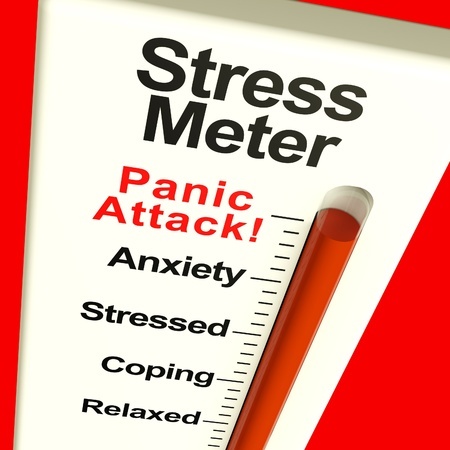
The New-York Times conducted a survey that asked people to scale their greatest fears. The surprising results showed that the fear of death was rated only second whereas speech anxiety was rated as the number one fear. Jerry Seinfeld probably knew what he was talking about when he joked about that “when being in a funeral you would rather be the deceased than read the eulogy.”
Every person is somewhat apprehensive when it comes to public speaking, but the sense of fear varies from person to person. Some people enjoy the excitement of public speaking and deliver well under the pressure. Yet, others are anxious just from the thought of speaking in public.
In today’s business world almost every business man or woman is required to present in front of a certain crowd and practice public speaking. For those who experience speech anxiety performing a presentation can be so troublesome that it will severely effect the message they’re trying to convey.
The good news about speech anxiety is that with the practice of some simple methods the anxiety level can be reduced substantially. Here are some methods you can try:
Start light – when starting your presentation don’t dive immediately into the heavy professional material. Try to open with a light ice breaker, an anecdote, a personal story – something that will increase the crowd’s attention level, and will make a good first impression. An attentive, interested crowd will give you the confident boost you need.
Support tools – Anxiety and stress can cause confusion and blanking out. Barbara Streisand suffered from stage fright to the point she forgot the lyrics to her songs in the middle of her show. The only thing that made her come back to the stages few years later was the teleprompter that was installed in each of her concerts so she won’t blank out ever again. If Barbara Streisand can do it, you certainly can! Don’t be afraid to use flash cards. Flash cards are legitimate accessory and very acceptable as an assistant tool during a presentation. Make sure that your flash cards will be concise and will always remind you the main message you are trying to convey, so if you starting to get confused you have something to get you back on track!
Practice, practice, practice – speech anxiety is not something we’re born with, but something we acquire. As social beings we’re concerned about people’s judgment and our own self-judgment. Therefore, good feedback on our presentations helps gain confidence. Practice! Reading the PPT slides over and over again is not enough! Practice it out loud, in front of the mirror, in front of people you trust to give you an honest feedback – your wife, your colleague, you can use professional trainers if needed, there are even professional feedback systems that can help you practice and improve your presentation and your feeling.
Additionally there are some physical adjustments you can make which can be very helpful:
Walking – during physical activity the body produces Endomorphin, which is the body’s natural tranquilizer and therefore helps for tension and stress relief. It is recommended to start walking for an hour, on a daily basis, a week before the presentation date.
Sugar – the excitement can cause Hypoglycemia, a situation where the blood-sugar level is low and the resultant effect is dizziness and nausea. Eating a sweet treat before the presentation will help raising the sugar blood level and maintain focus.
Confident outfit – wear something you feel good in. when we feel good about our looks our confidence level goes straight up. Make sure that the “confident outfit” is also comfortable. You don’t want to be unsettled in the middle of the presentation for sore feet, sweat or itchiness.
The good news about speech anxiety is that you have the power to change it: it’s in your hands! Studies found that there is NO correlation between the anxieties we feel and the crowd’s perception. In other words, the anxiety you’re experiencing doesn’t get through to the audience, most of the times. So don’t give up to the pressure and conquer that stage.
